What does the solo life in Rust actually look like when one player holds a monument against multiple neighbors?
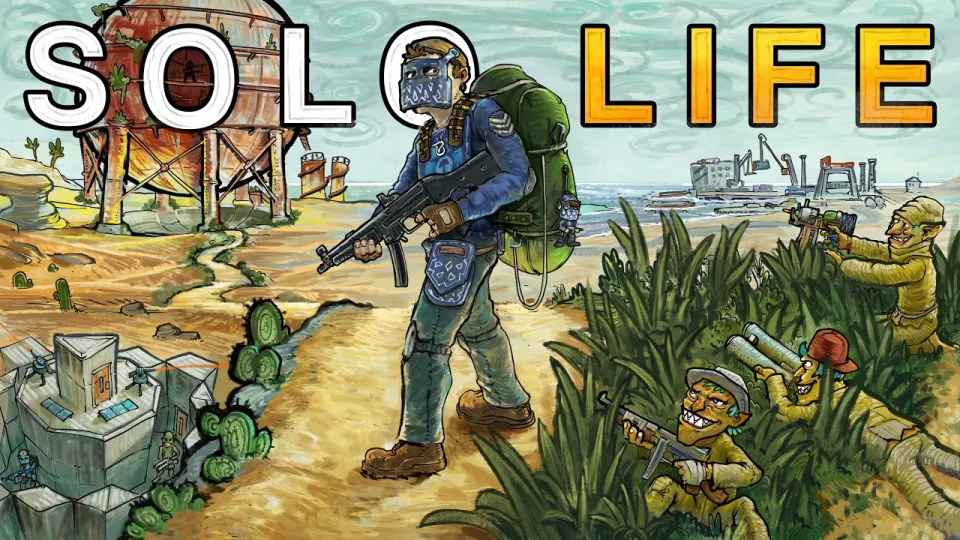
Video: Rust - THE SOLO LIFE V16
Need articles like this for your video? They help promote it on YouTube and Google — order them in the Telegram bot @sat_sit_bot. Articles with your video embedded are written and posted by the bot itself — on popular topical sites (no ads). Try it free: 50 articles on us.
· based on the channel Blooprint
Rust solo life is the practice of playing the game without a team: one player gathers, builds, raids and defends alone, and the whole run lives or dies on monument control, base placement and diplomacy with neighbors. Blooprint's The Solo Life V16 is a clean example, built around holding a single high-value monument while several irritated neighbors try to take it back. If you want the short version, the solo life in Rust is less about aim and more about choosing ground you can actually hold and people you can actually talk to.
The episode is sponsored by War Thunder, and you can grab the free bonus through the War Thunder registration link used in the video — it costs nothing and supports the channel's solo projects.
Why holding a monument solo is the real test of a Rust solo run
A monument is the fastest route to loot, but it is also the loudest, and holding one alone means you accept constant contact. In this episode the monument becomes the anchor of the entire wipe: it feeds the base, it attracts the fights, and it turns random neighbors into a standing threat. Solo players usually avoid this because a group can rotate three players onto one position in under a minute, so the decision only works when the base is close enough to respawn and re-enter the fight quickly.
What makes the setup interesting is the economics. A group spending ten or twenty minutes pushing a solo player at a monument is burning time it could spend farming or raiding someone weaker, and the video leans into that asymmetry. Every failed push costs the neighbors more than it costs the defender, as long as the defender keeps replacing kits and never lets the loot pile sit unsecured.
The neighbors, the diplomacy and the friendly player who changes the run
Neighbors decide more solo runs than any weapon does, because a solo base with hostile surroundings is a slow death and a solo base with neutral surroundings is a farm simulator. In V16 the map fills up with players who keep coming back after losses, and the dynamic shifts the moment one of them turns out to be genuinely helpful rather than opportunistic. That friendly contact becomes a recurring presence, and viewers clearly responded to it — a good neighbor is worth more than a crate of guns when you have nobody to watch your back.
The practical lesson is that solo diplomacy is a skill you can practice. Talking first, trading instead of shooting, and remembering who helped you are all cheaper than rebuilding a door frame for the fourth time. It does not remove the threat of the angry neighbors, but it gives you one person on the server who will not shoot you in the back while you are busy elsewhere.
How solo raiding and online raid defense work without a team
Solo raiding in Rust is a logistics problem before it is a combat problem, and online defense is the same problem in reverse. Attacking alone means you carry your own explosives, your own backup kits and your own escape plan, and it means the moment the owners log in you are fighting a clock as much as a squad. Defending alone means pre-placed bags, a base layout with chokepoints, and knowing which wall you can afford to lose.
The episode's standout sequence is a defense where two solo players end up effectively fighting as a pair — two people with their own goals holding the same ground against a bigger push. That is the closest a solo player gets to a team without giving up independence, and it is the sort of thing that only happens when you have invested in the people around you instead of treating every name on the map as a target.
Some habits that make solo raids survivable:
- Scout the base at night or from a distance before you commit any explosives.
- Stage loot and backup kits in a stash or a nearby bag so a wipe on the raid does not wipe your wipe.
- Bring more boom than you think you need — a half-finished raid is a gift to the owners.
- Expect the counter-raid and plan the exit before you blow the first door.
- Keep a second small base or a hidden stash so losing the main base is annoying, not final.
Starter bases, gear and the small decisions that keep a solo alive
Starter bases and early gear choices set the ceiling for the rest of a solo wipe, and the video's early build drew immediate comparisons to other well-known starter designs. The logic is simple: a cheap, fast, hard-to-raid starter lets you bank progress in the first hours, and a compact footprint with a tight loot room means a raider has to spend more to reach less. From there, the progression is familiar — better weapons, better armor, and enough spare kits that one bad fight does not reset the run.
Gear discipline matters just as much. A solo player who brings a full kit to every fight runs out of kits, while a solo player who brings nothing never wins anything. The middle path is bringing enough to win the fight you chose and nothing you cannot replace, and saving the expensive loadouts for monument control and raid defense where the payoff is real.
What viewers keep asking about the solo life in Rust
The most common questions around solo content are about exactly this episode's structure: how a single player survives a map full of groups, why the format is so watchable, and whether the friendly-neighbor angle is scripted luck or a repeatable habit. The short answers are preparation, pacing and initiative. Solo runs are watchable because every decision is visible and every loss is personal, and friendly neighbors appear far more often when you talk to people instead of shooting on sight.
The other recurring question is what a solo player should actually copy. The honest answer is not the aim or the raid targets — it is the base placement, the bag network, the stash discipline and the willingness to negotiate. Those are the parts that transfer to any server, any wipe and any skill level.
Useful links
- War Thunder free bonus via the video's PC and console link
- War Thunder mobile link
- Blooprint on Twitch
- Blooprint on Kick
- Blooprint on TikTok
Final thoughts on solo survival in Rust
Holding a monument alone against multiple neighbors is not a flex of raw aim; it is a demonstration of preparation, positioning and social awareness, and The Solo Life V16 makes that case clearly. The run works because the base is close, the kits are replaceable and at least one neighbor chose cooperation over conflict. If you take one thing from it, take the idea that a solo player's real advantage is patience — groups get bored, solo players get stubborn. The episode comes from Blooprint, whose channel has leaned harder into solo content, and the War Thunder sign-up link from the video is the free way to back that direction.
Key takeaways
- Blooprint's The Solo Life V16 shows a fully solo run built around holding one high-value monument instead of hiding in a corner base.
- The core conflict is a solo player versus several nearby groups that keep returning after failed pushes.
- Solo raiding and online raid defense both appear, including a defense where two solo players effectively fight side by side.
- A friendly neighbor becomes a recurring ally, which is how many solo runs survive contact with larger groups.
- The episode follows A Solo's Journey 4, and the channel has said solo content is now a bigger priority.
Questions & answers
How does a solo player hold a monument in Rust without a team?
By treating the monument as a base problem rather than a fighting problem: build close enough to respawn and re-enter the fight quickly, keep spare kits ready, and never let loot sit unsecured. The defender wins the long game because every failed push costs a group more time than it costs one player.
Is solo raiding in Rust actually viable against groups?
Yes, but it is a logistics exercise. Bring more explosives than you expect to need, stage backup kits and a stash nearby, scout before committing, and plan the exit before the first door falls. A half-finished raid usually hands the base back to its owners.
Why are friendly neighbors so important in a solo wipe?
A solo base surrounded by hostile players is a constant drain, while one friendly contact gives you someone who will not shoot you in the back and may help during a defense. That kind of relationship usually starts with talking and trading instead of shooting on sight.
What should a new solo player copy from this kind of run?
Copy the structural habits, not the aim: a cheap hard-to-raid starter, a bag network, hidden stashes and a second small base so one loss is not final. Those decisions transfer to any server and any skill level.
Source: Rust - THE SOLO LIFE V16 · Markdown version